AV blocks
Sinus Bradycardia With First-Degree AV Block on an EKG Strip
Sinus bradycardia with first-degree AV block is one strip with two measurements out of range. The sinus node is firing fewer than 60 times a minute, and every impulse takes longer than 0.20 seconds to pass through the AV node. Each P wave is still followed by a QRS, so no beats are dropped.
Criteria from the American Heart Association guidelines and published ECG standards · Every strip checked by measurement · Sources and method · Updated November 15, 2026
- Rate
- < 60
- PR interval
- > 0.20 s, constant
- QRS
- < 0.12 s
How to identify sinus bradycardia with first-degree AV block in five steps
Ask the same five questions of every strip. The right-hand column is what each one finds on the strip above.
1Rate
Under 60, set by a slow sinus node.
52 bpm
2Rhythm
Regular, with long, even gaps between beats.
Regular
3P waves
Upright and uniform, one for each QRS and none left over.
1 per QRS
4PR interval
Over 0.20 seconds, and it stays the same.
0.29 s, long
5QRS
Narrow: conduction through the ventricles is not affected.
0.09 s
What is happening in the heart
Both findings reflect slowing in the upper part of the conduction system. The sinus node sets the rate and the AV node sets the PR interval, and the two are supplied by the same nerve, the vagus, and usually by the same coronary artery. They also respond to the same drugs. Whatever slows one therefore tends to slow the other, which is why a slow rate and a long PR interval are so often found together.
More sinus bradycardia with first-degree AV block strips: no two are the same
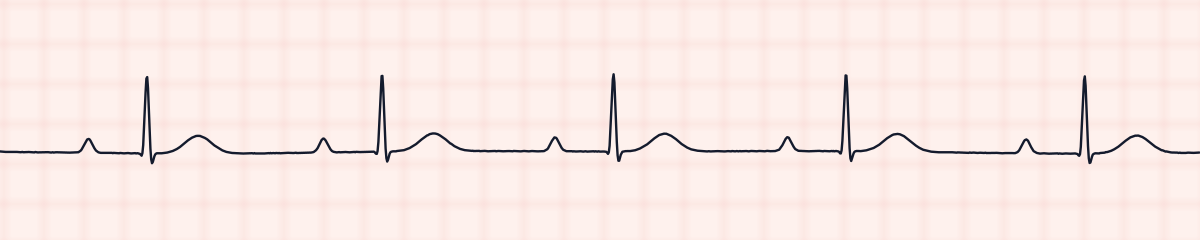
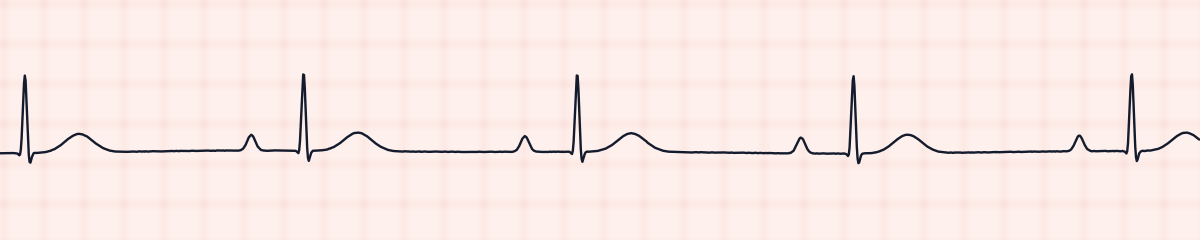
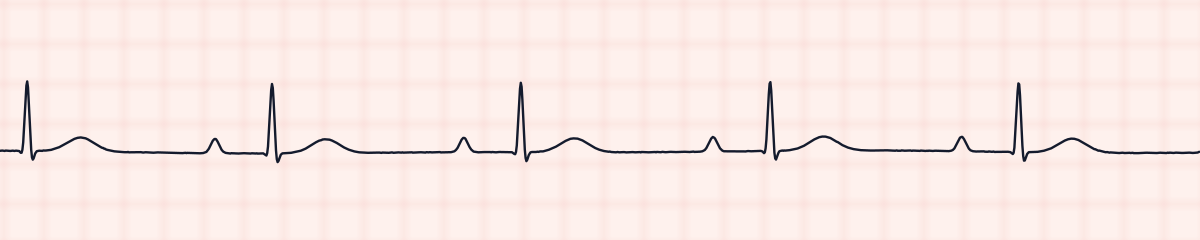
A rhythm is a set of rules, not a picture. These three strips all meet the rules for sinus bradycardia with first-degree AV block, with different numbers.
What sinus bradycardia with first-degree AV block gets mistaken for
Sinus bradycardia with first-degree AV block vs. sinus bradycardia
Sinus bradycardia by itself has a PR interval of 0.20 seconds or less. The slow rate is obvious at a glance; the PR interval has to be measured.
Sinus bradycardia with first-degree AV block vs. first-degree AV block
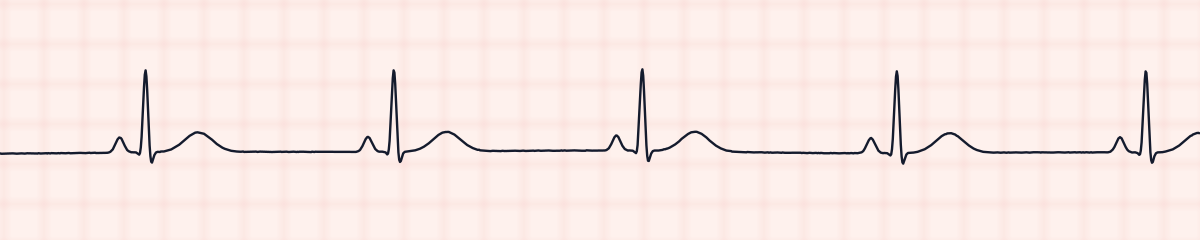
First-degree block at a normal rate shows the same long PR interval at 60 beats a minute or more.
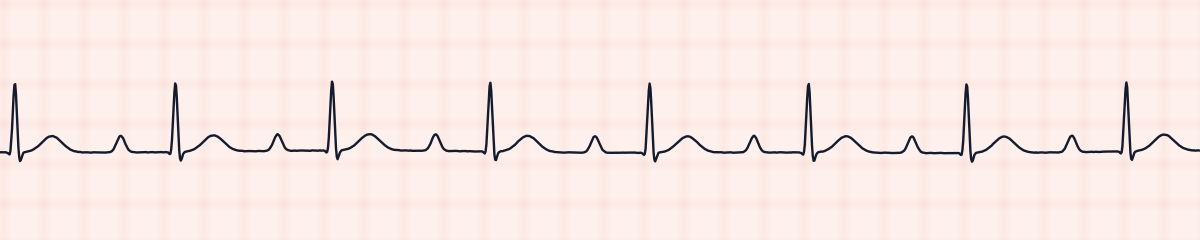
Sinus bradycardia with first-degree AV block vs. third-degree (complete) AV block
Complete heart block is also slow with P waves, but it has more P waves than QRS complexes and a PR interval that is never the same twice. Here there is exactly one P wave per QRS and the PR does not change.
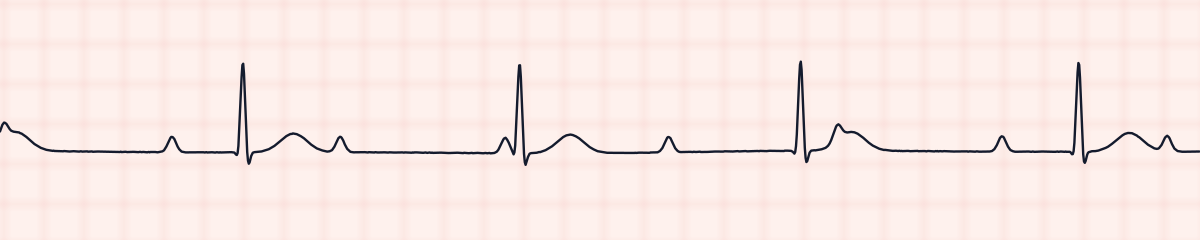
Sinus bradycardia with first-degree AV block vs. junctional rhythm
A junctional escape rhythm is slow and regular but has no upright P wave leading the QRS.
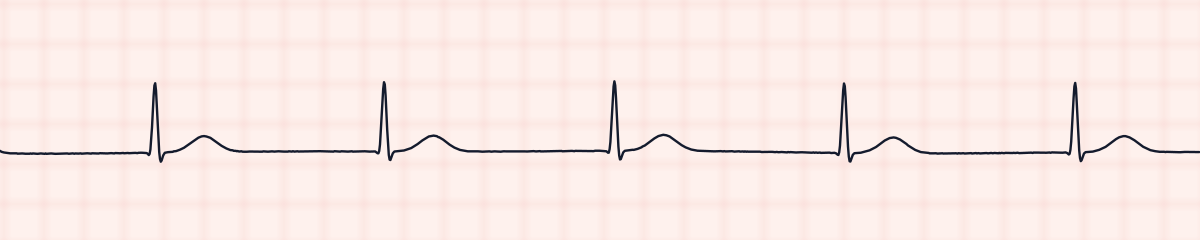
Practice: sinus bradycardia with first-degree AV block or a look-alike?
Five strips. Some show sinus bradycardia with first-degree AV block; the others are the rhythms most often confused with it.
Strip 1 of 5
Lead II · 25 mm/s · 6 s
Causes of sinus bradycardia with first-degree AV block
- Beta blockers, calcium channel blockers (diltiazem, verapamil), digoxin and amiodarone
- High vagal tone, from sleep, athletic conditioning or vomiting
- An inferior heart attack
- An underactive thyroid
- High potassium
- Low body temperature
- Age-related slowing of the sinus and AV nodes
Why it matters
Many people with this combination feel fine, particularly athletes and patients whose medication is doing what it was prescribed to do. It matters when the slow rate lowers cardiac output, bringing dizziness, fatigue, low blood pressure or confusion, or when it marks a conduction system under increasing strain. After a dose increase of a drug that slows the AV node, or in the hours after an inferior heart attack, it can be the first step toward a higher-degree block.
What is done for sinus bradycardia with first-degree AV block
- Assess for signs of low output and take a blood pressure.
- Record both the rate and the PR interval so that later strips can be compared.
- Review the medication list; many units hold a rate-slowing drug below a set heart rate and check with the provider.
- A patient with no symptoms is usually observed.
- A slow rate that causes symptoms is treated as bradycardia, with atropine as the usual first drug.
Study summary, not a protocol. Follow current American Heart Association guidelines and your facility’s policies. See the medical disclaimer.
Common mistakes with sinus bradycardia with first-degree AV block
- Reporting the bradycardia and never measuring the PR interval.
- Naming one finding and stopping, because the strip already “has an answer”.
- Calling it a second- or third-degree block because it is slow. If every P wave is followed by a QRS, nothing is completely blocked.
- Giving the next dose of a beta blocker or digoxin without mentioning the new finding.
Questions about sinus bradycardia with first-degree AV block
Can you have sinus bradycardia and first-degree AV block at the same time?
Yes, and it is common. The rate describes how often the sinus node fires; the PR interval describes how long the AV node takes. Each is assessed separately and both are reported.
What causes a slow heart rate with a long PR interval?
Most often medication that slows both nodes, such as a beta blocker, a calcium channel blocker or digoxin. High vagal tone and an inferior heart attack are other common causes.
Is sinus bradycardia with first-degree AV block dangerous?
Not usually. It is watched for symptoms of a low heart rate and for progression: a PR interval that lengthens further, or a P wave with no QRS after it.
How should the strip be named?
With both findings: sinus bradycardia with first-degree AV block, followed by the rate and the measured PR interval.