Ventricular rhythms
PVC triplet (run of V-tach) EKG strip
A ventricular triplet is three premature ventricular contractions in a row. On an EKG strip three wide beats with no P waves follow each other at a rate above 100, and then the normal rhythm returns. Three or more consecutive ventricular beats is the definition of ventricular tachycardia, so a triplet is its shortest form, also called a salvo or a run of nonsustained V-tach.
Criteria from the American Heart Association guidelines and published ECG standards · Every strip checked by measurement · Sources and method · Updated November 15, 2026
- Rate
- Underlying rhythm
- PR interval
- None on the PVCs
- QRS
- Three wide beats in a row
How to identify a PVC triplet in five steps
Ask the same five questions of every strip. The right-hand column is what each one finds on the strip above.
1Rate
The underlying rate, with three beats at over 100 per minute inside the run.
~80 bpm
2Rhythm
Regular, broken by three rapid beats and the pause after them.
Regular, with three early beats in a row
3P waves
Normal on the sinus beats; none during the run.
None on the early beats
4PR interval
Normal on the sinus beats.
0.16 s on sinus beats
5QRS
Narrow on the sinus beats; the three beats of the run are each 0.12 s or wider.
0.08 s; early beats 0.16 s
What is happening in the heart
A focus or a small circuit in the ventricle takes over for three beats and then stops by itself. The same mechanism, if it did not stop, would be sustained ventricular tachycardia. What ends the run is usually the circuit meeting tissue that has not yet recovered.
More PVC triplet strips: no two are the same
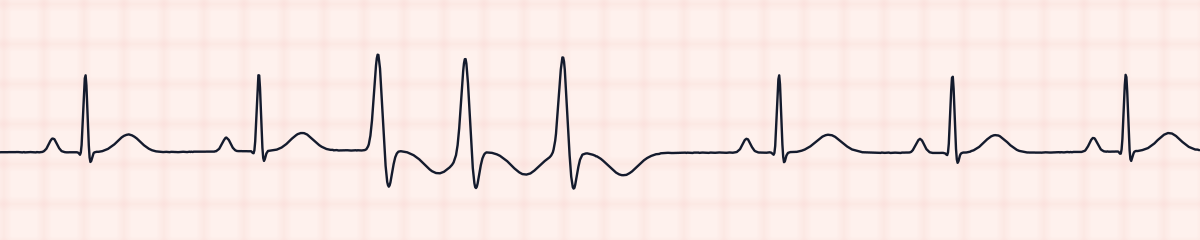
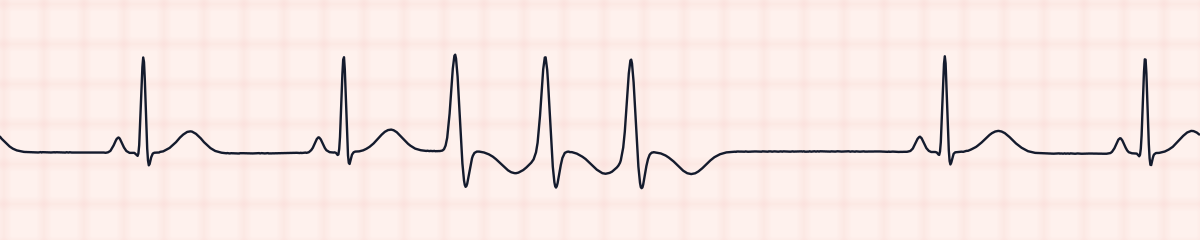
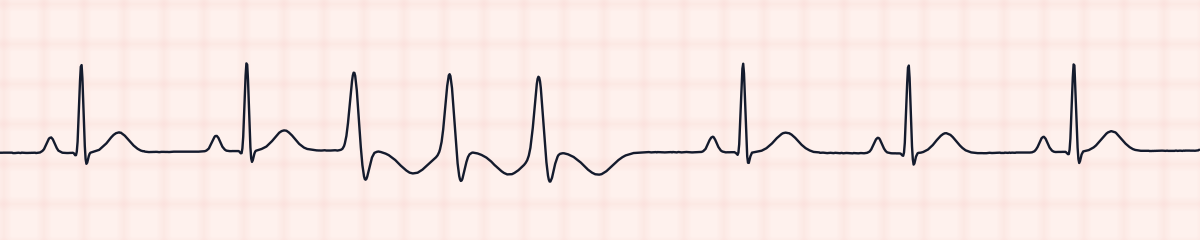
A rhythm is a set of rules, not a picture. These three strips all meet the rules for a PVC triplet, with different numbers.
What a PVC triplet gets mistaken for
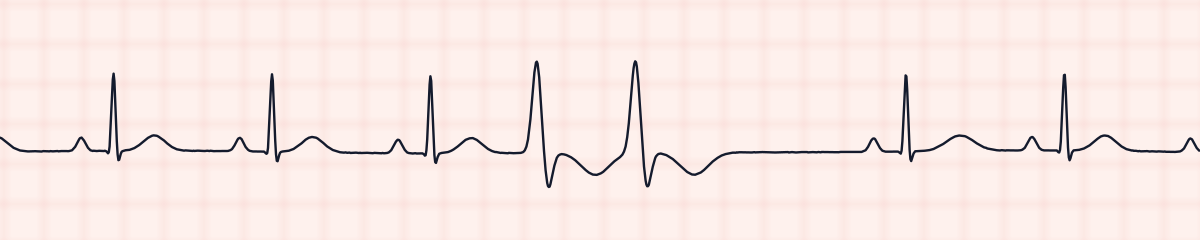
PVC triplet vs. ventricular couplet (paired PVCs)
A couplet stops after two wide beats. Count again: a third one makes it a triplet and changes the name to ventricular tachycardia.
PVC triplet vs. ventricular tachycardia
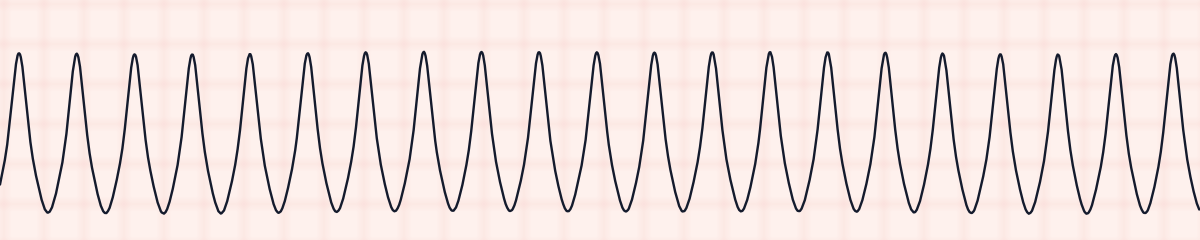
Sustained ventricular tachycardia continues: the wide beats fill the strip. A triplet is three beats long and the patient’s own rhythm is visible before and after it.
PVC triplet vs. premature ventricular contractions (PVCs)
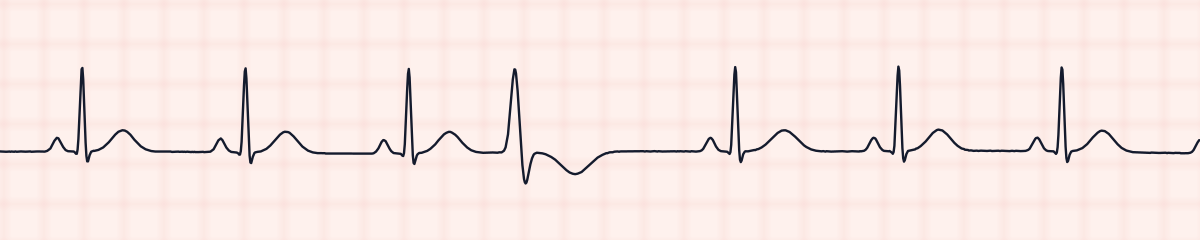
Isolated PVCs come one at a time, each separated by normal beats.
Practice: a PVC triplet or a look-alike?
Five strips. Some show a PVC triplet; the others are the rhythms most often confused with it.
Strip 1 of 5
Lead II · 25 mm/s · 6 s
Causes of a PVC triplet
- Acute coronary syndrome
- Scar from an earlier heart attack
- A weak or enlarged heart
- Low potassium or magnesium
- A prolonged QT interval
- Low oxygen
Why it matters
A triplet is ventricular tachycardia that happened to stop. It is over in about a second and may not be felt, but it shows the ventricle can start V-tach, and the next run may be longer. Runs of nonsustained V-tach are reported promptly.
What is done for a PVC triplet
- Go to the patient: check responsiveness, pulse and blood pressure.
- Save the strip and record the number of beats in the run.
- Notify the provider promptly.
- Anticipate potassium and magnesium levels and a 12-lead ECG.
- Keep the patient monitored and make sure emergency equipment is at hand.
Study summary, not a protocol. Follow current American Heart Association guidelines and your facility’s policies. See the medical disclaimer.
Common mistakes with a PVC triplet
- Dismissing it as “just some PVCs.”
- Miscounting the run. The number of beats is the first thing the provider will ask.
- Mistaking motion artifact for a run; check whether the patient’s own QRS complexes march through it.
Questions about a PVC triplet
How many PVCs in a row is V-tach?
Three or more consecutive ventricular beats at a rate above 100 per minute. A run that ends by itself in under 30 seconds is called nonsustained ventricular tachycardia.
What is a ventricular triplet?
Three PVCs in a row. It is the shortest run that meets the definition of ventricular tachycardia, and is also called a salvo.
What should a nurse do for a run of V-tach?
Assess the patient immediately, save the strip, count the beats in the run, and report it. Expect electrolytes to be checked and the cause to be looked for.