Paced rhythms
Pacemaker Failure to Pace on an EKG Strip
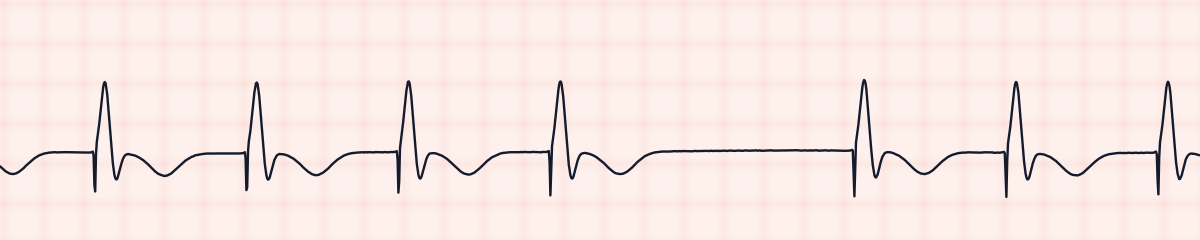
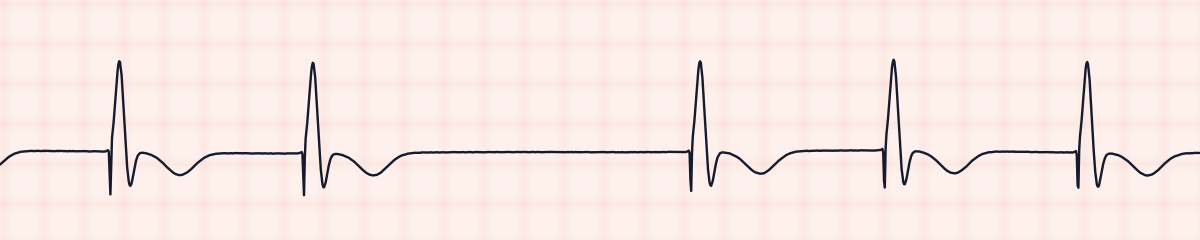
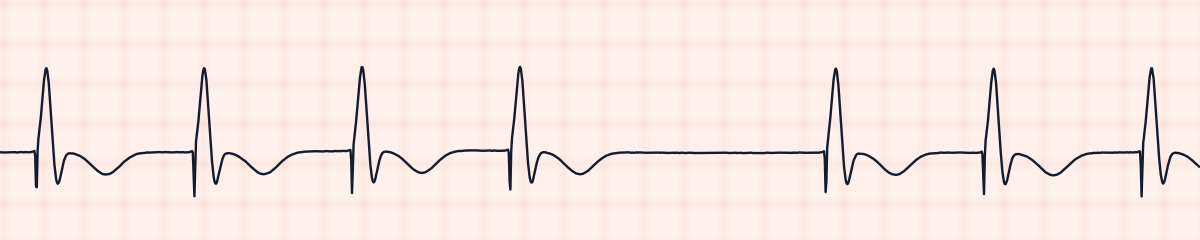
Failure to pace, also called failure to fire or output failure, is a pacemaker malfunction in which the device does not deliver a pulse when one is due. On the strip the paced rhythm is interrupted by a pause that contains neither a pacing spike nor a QRS.
Criteria from the American Heart Association guidelines and published ECG standards · Every strip checked by measurement · Sources and method · Updated November 15, 2026
- Rate
- Below the set rate
- PR interval
- None
- QRS
- ≥ 0.12 s on paced beats
How to identify failure to pace in five steps
Ask the same five questions of every strip. The right-hand column is what each one finds on the strip above.
1Rate
Below the set rate, by the number of beats that were not delivered.
~60 bpm
2Rhythm
Regular paced beats, then a gap longer than the pacing interval.
Regular, with a 1.6 s pause
3P waves
None with a ventricular pacemaker, unless the patient’s own atrial activity shows through.
None
4PR interval
Not applicable to paced ventricular beats.
None; no spike in the pause
5QRS
Wide and spike-led where pacing occurs. In the pause there is neither.
0.16 s, wide
What is happening in the heart
A pacing pulse has to be produced by the battery and circuitry and carried to the heart by an intact lead. Nothing appears on the strip if the generator does not produce the pulse, if a broken wire or loose connection stops it on the way, or if the device withholds it on purpose. That last case is oversensing: the pacemaker picks up an electrical signal that is not a heartbeat, such as chest muscle activity or interference from nearby equipment, takes it for one, and resets its timer instead of firing.
More failure to pace strips: no two are the same
A rhythm is a set of rules, not a picture. These three strips all meet the rules for failure to pace, with different numbers.
What failure to pace gets mistaken for
Failure to pace vs. pacemaker failure to capture
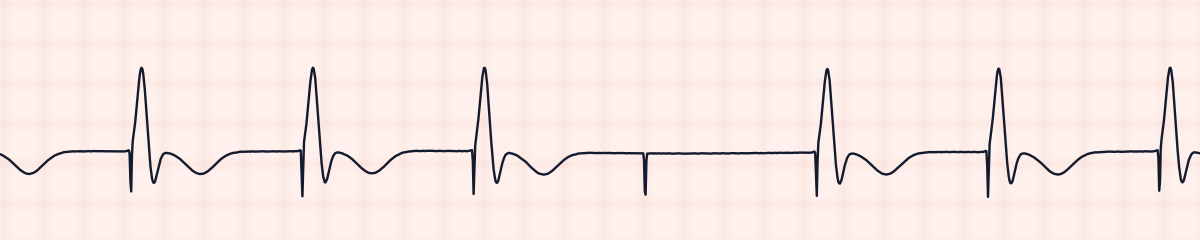
Look into the pause. A spike standing alone in it means the pacemaker fired and the heart did not answer, which is failure to capture. An empty pause means the pacemaker never fired.
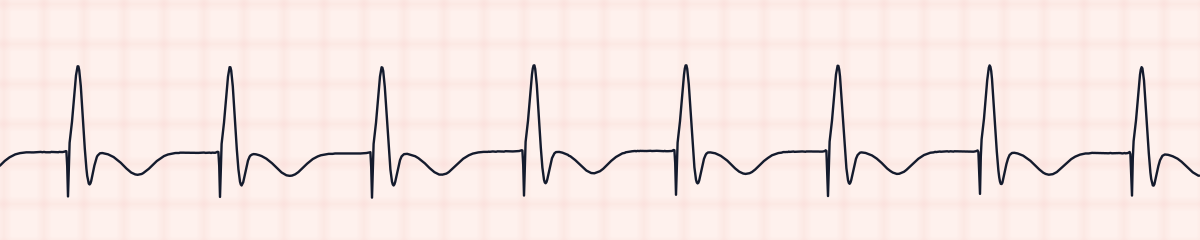
Failure to pace vs. ventricular paced rhythm
A healthy paced rhythm keeps one interval from spike to spike. Any gap longer than that interval, with no natural beat to explain it, is a failure to pace.
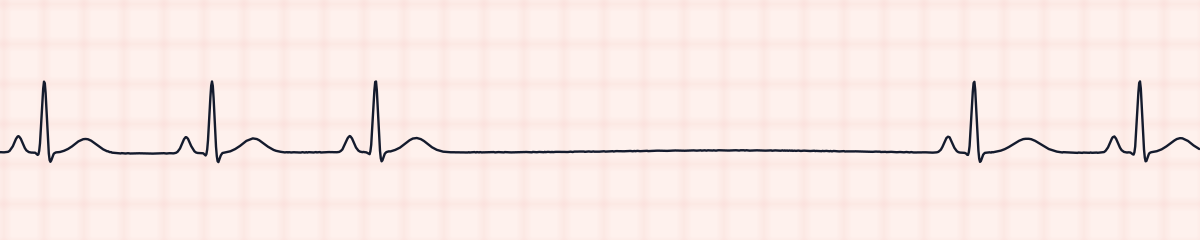
Failure to pace vs. sinus arrest (sinus pause)
Sinus arrest is an empty pause as well, but the beats around it are natural ones with P waves, not paced beats with spikes.
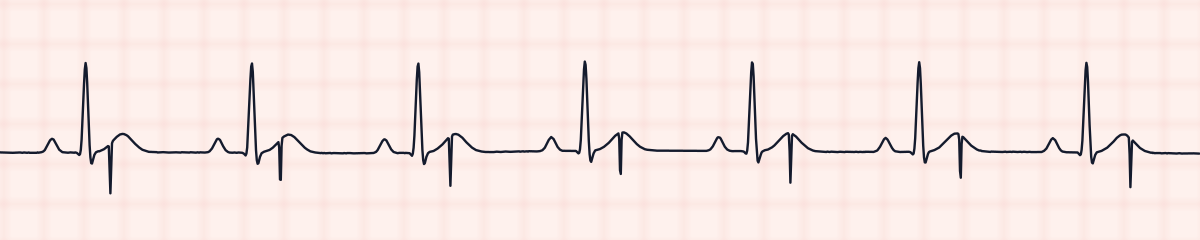
Failure to pace vs. pacemaker failure to sense
Undersensing adds spikes that are not needed; failure to pace leaves out spikes that are.
Practice: failure to pace or a look-alike?
Five strips. Some show failure to pace; the others are the rhythms most often confused with it.
Strip 1 of 5
Lead II · 25 mm/s · 6 s
Causes of failure to pace
- Oversensing of muscle movement or outside electrical interference
- A fractured lead or damaged insulation
- A loose connection between lead and generator, or a disconnected cable on a temporary pacemaker
- Battery depletion
- Failure of the generator itself, which is rare
Why it matters
Patients are paced because their own rhythm cannot be relied on. Each undelivered pulse is a beat with nothing behind it unless an escape rhythm happens to step in. A pause of a second or two may cause dizziness; a longer one causes fainting, and in a patient with no rhythm of their own, cardiac arrest.
What is done for failure to pace
- Go to the patient before the equipment: level of consciousness, pulse and blood pressure.
- Print the strip and measure the pause.
- On a temporary pacemaker, trace the system from patient to box: connections, cable, battery, settings.
- Notify the provider, and anticipate transcutaneous pacing if pauses are long or the patient has symptoms.
- A permanent pacemaker is checked by interrogation and, if a lead problem is suspected, a chest X-ray.
Study summary, not a protocol. Follow current American Heart Association guidelines and your facility’s policies. See the medical disclaimer.
Common mistakes with failure to pace
- Not looking for the spike. Whether one is present in the gap is the only thing that separates this from failure to capture.
- Assuming a flat stretch is a loose electrode without checking the patient.
- Blaming the battery when a disconnected cable is the more common fault on a temporary pacemaker.
- Forgetting oversensing: a pacemaker in good working order may be withholding pulses because it is being fooled.
Questions about failure to pace
What does failure to pace look like on an EKG?
A paced rhythm with a pause longer than the pacing interval, in which there is no pacing spike and no QRS complex.
What is the difference between failure to pace and failure to capture?
In failure to pace the spike is absent. In failure to capture the spike is present but no QRS comes after it. Either way a beat is missing.
Can oversensing cause failure to pace?
Yes. If the pacemaker senses something that is not a heartbeat, it is inhibited and withholds its pulse. On the strip this cannot be told apart from other causes of a missing spike.
What should a nurse check first?
The patient. Then, for a temporary pacemaker, every connection from the pacing wires to the generator, the battery indicator and the programmed settings.